As tech teams become increasingly global, HR and L&D leaders face a key challenge: how to evaluate English communication skills accurately for engineering and technical roles.
CEFR (Common European Framework of Reference) has become the global standard – but many companies still treat it like an academic scale instead of a practical communication benchmark for real engineering work.
This guide explains CEFR levels in a tech workplace context and shows how you can use them to hire, promote, and upskill engineers effectively.
What is CEFR? Quick Explanation
CEFR is an international framework that measures language ability across six levels:
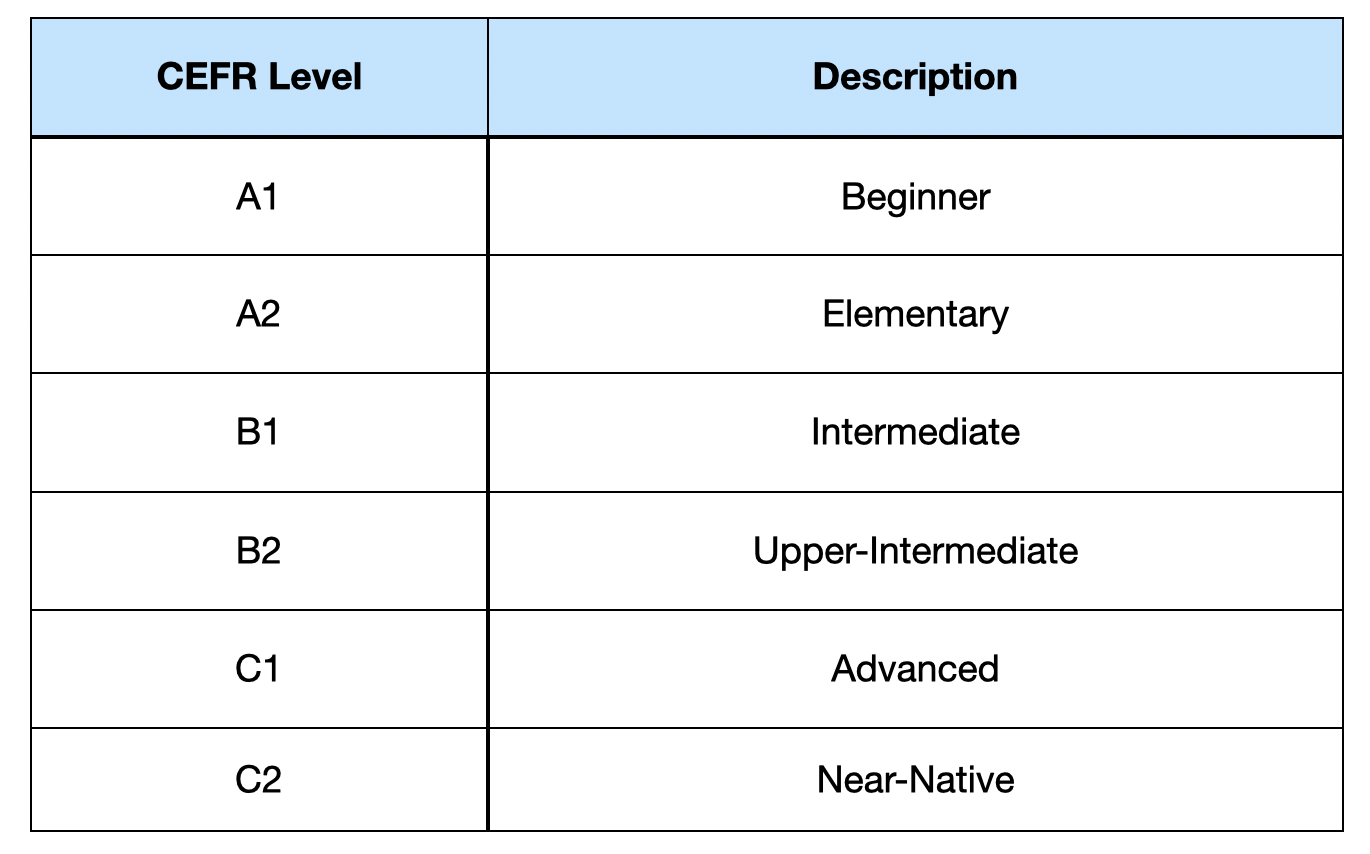
In education, CEFR tells you how well someone can read/write.
In tech, it tells you if someone can…
- Join stand-ups and explain blockers
- Clarify requirements with PMs
- Write clear documentation
- Present solutions to stakeholders
- Handle customer interactions
CEFR Levels Translated to Tech Communication Skills
A2: Can Understand Basics (Junior Trainee Stage)
Typical behavior
- Understands simple task instructions
- Uses short sentences
- Hesitates often
Tech examples
- Reads Jira tasks with support
- Can answer simple yes/no questions in stand-ups
- Struggles with follow-up questions or “why?”
Suitable for
- Interns
- Technical trainees
Needs
- Guided speaking practice
- Vocabulary for tools/processes
B1: Can Participate in Team Communication
Typical behavior
- Understands team discussions
- Gives simple explanations
- May lack fluency and structure
Tech examples
- Describes their tasks in stand-ups
- Can explain bugs at a simple level
- May struggle with client calls or complex discussions
Suitable for
- Junior devs
- QA testers
- Operations support
Needs
- Practice explaining technical decisions
- Confidence speaking spontaneously
B2: Can Communicate Confidently in Most Tech Situations
Typical behavior
- Explains reasoning clearly
- Handles questions and back-and-forth discussions
- Good fluency with occasional mistakes
Tech examples
- Confident in daily stand-ups and retros
- Explains root causes to PMs
- Handles collaboration with international teammates
Suitable for
- Mid-level engineers
- Technical support
- Customer-facing engineers with guidance
Needs
- Nuance in tone
- Better organization of ideas
B2 is the typical minimum CEFR level for distributed engineering teams.
C1: Professional, Fluent Communication
Typical behavior
- Can persuade and negotiate
- Precise and structured communication
- Handles fast native speech easily
Tech examples
- Leads meetings across time zones
- Presents architecture decisions
- Conducts demos and client onboarding
Suitable for
- Senior engineers
- Tech leads
- Client-facing roles
Needs
- Cultural nuance (especially working with U.S. teams)
- Leadership language skills
C2: Near-Native, Strategic Communicator
Typical behavior
- Highly nuanced expression
- Adapts tone to audience (engineering vs. stakeholders)
- Handles sensitive/escalated conversations
Tech examples
- Drives product discussions
- Mentors others in communication
- Represents the org in external talks
Suitable for
- Executive-level engineering leaders
- Solutions architects
- PMs in global markets
How to Use CEFR to Guide Hiring & Training in Tech
✅ Hiring Benchmarks
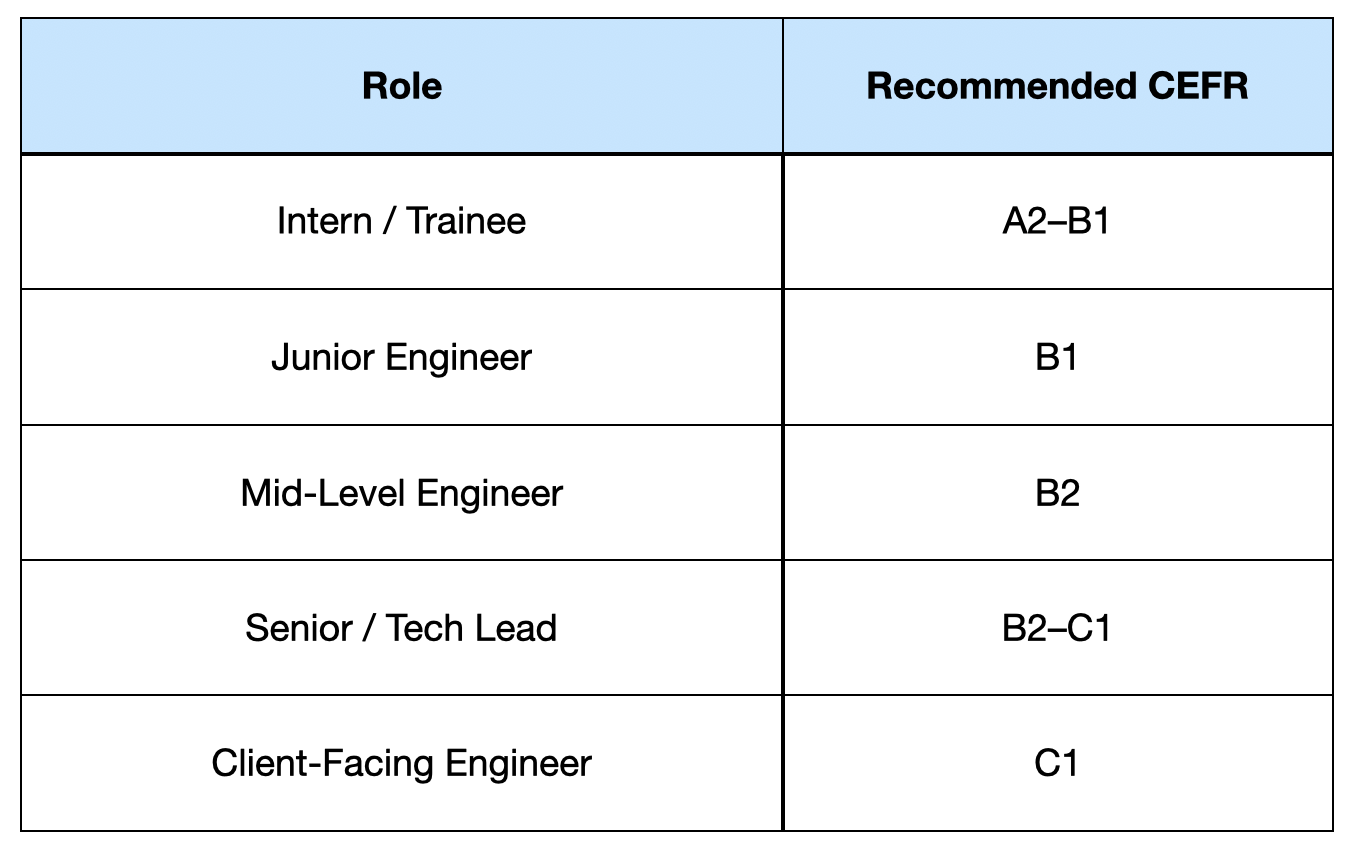
✅ Promotion & Leadership Development
Use CEFR to identify future leaders:
- B2 devs strong in grammar but weak in fluency → practice demos and discussions
- C1 engineers → prepare for client-facing leadership tracks
✅ L&D Training Path
CEFR helps personalize learning:
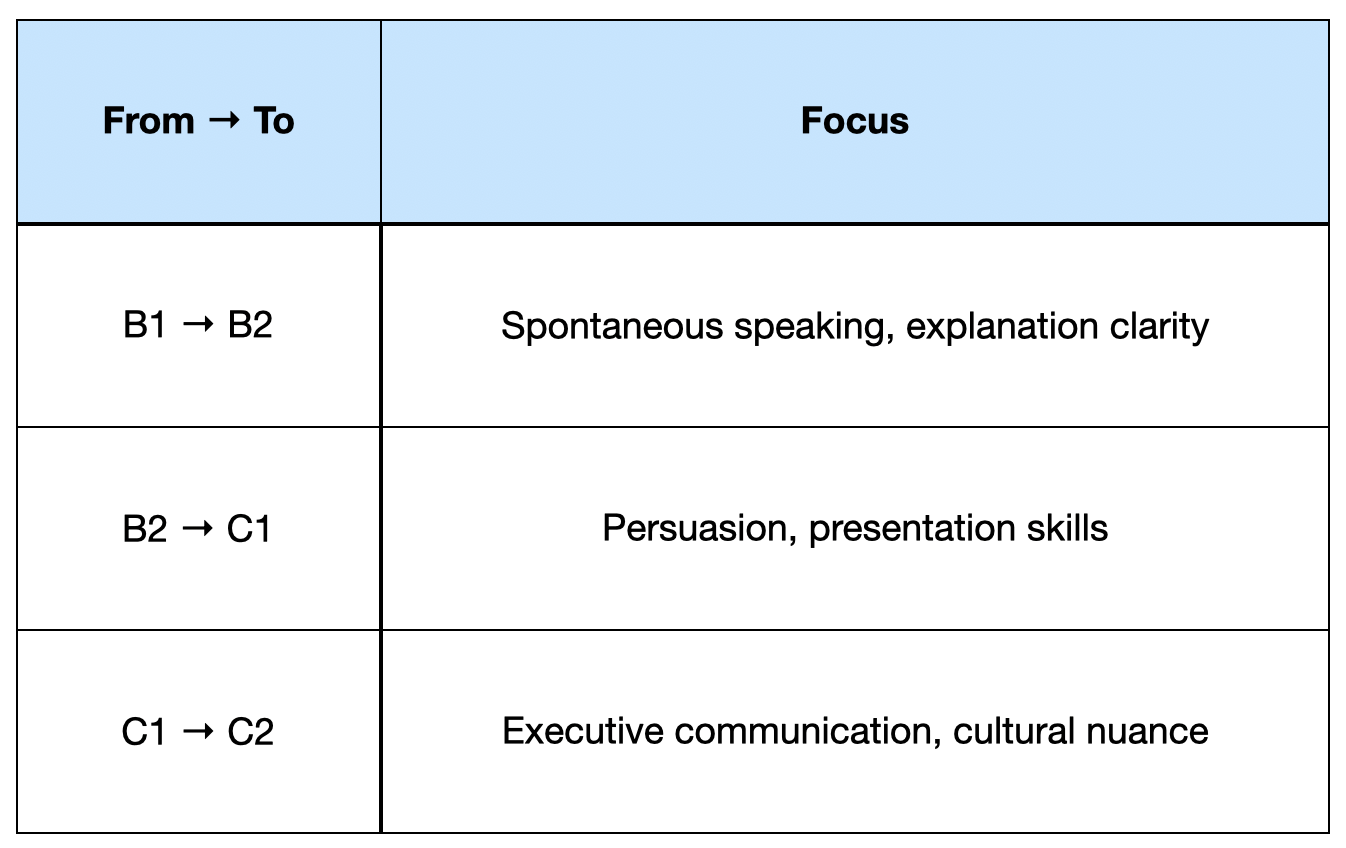
Tip: Pair CEFR with role-based scenarios (debugging, sprint planning, client demos, technical documentation)
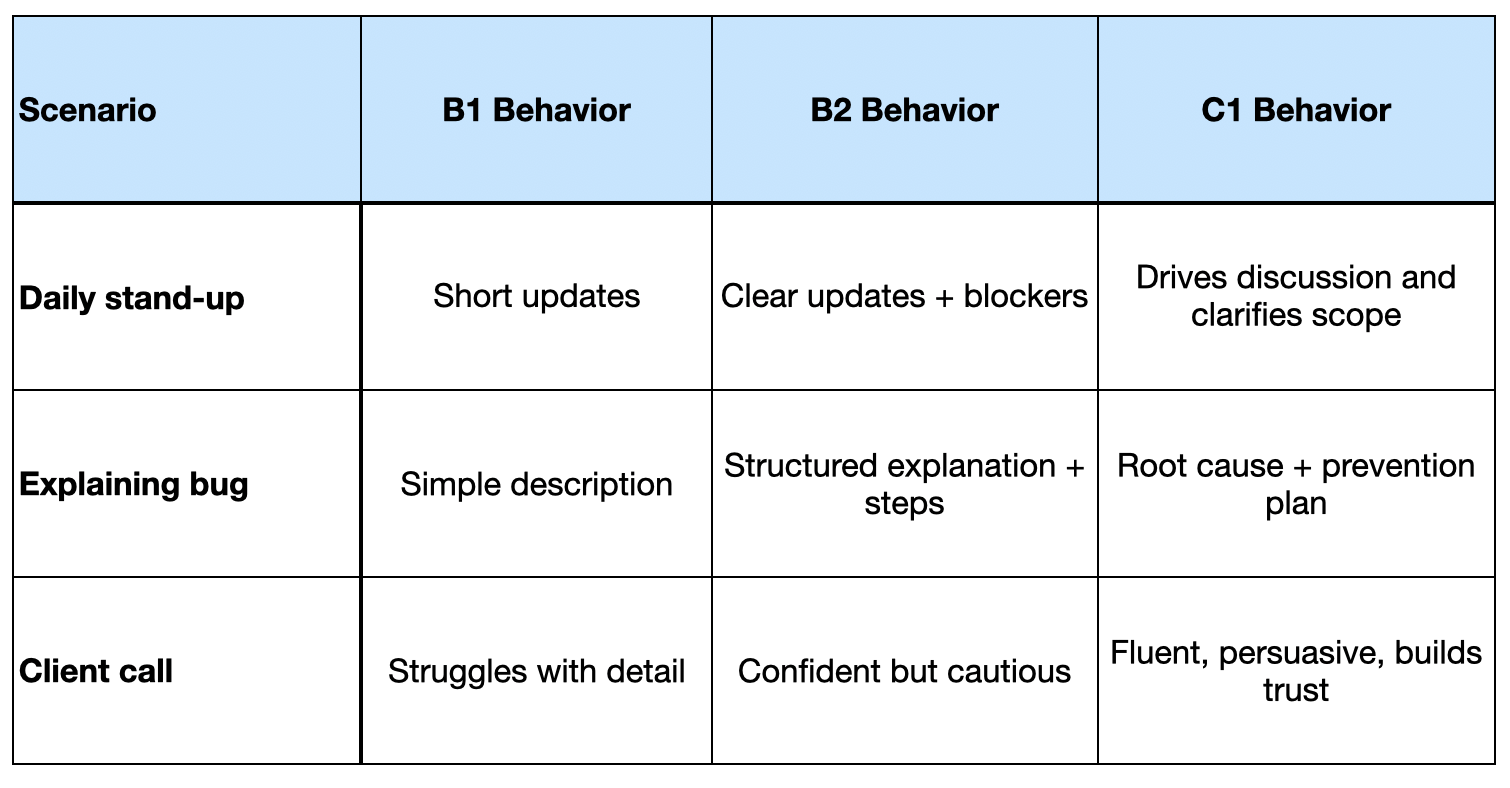
CEFR in Action: Tech Scenarios by Level
How to Assess CEFR Levels Accurately in Tech Teams
Traditional tests fail because they:
- Focus on grammar, not speaking
- Don’t assess real engineering communication contexts
- Are slow and subjective
Modern approach:
- AI-based CEFR speaking assessment
- Real tech-scenario tasks
- Audio feedback + analytics
- Scalable for hiring AND upskilling
✅ Try a CEFR speaking-specific assessment
- Fast (results in minutes)
- CEFR-aligned
- Tailored for technical roles
✅ Train tech teams using CEFR-based modules
- Scenarios: explaining system design, debugging, handling tickets
- Cultural fluency for working with U.S. and global clients
Key Takeaways
- CEFR is a practical tool for measuring tech communication, not just a language scale
- B2 is the minimum for global engineering teams
- C1 enables leadership and client-facing roles
- AI-based CEFR assessment helps hire better and upskill faster
- SmallTalk2Me offers CEFR testing + tech-focused speaking practice


